Moses is a statistical machine translation engine that can be used to train statistical models of text translation from a source language to a target language, developed by the University of Edinburgh. Moses then allows new source-language text to be decoded using these models to produce automatic translations in the target language. Training requires a parallel corpus of passages in the two languages, typically manually translated sentence pairs. Moses is free and open-source software, released under the GNU Library Public License (LGPL), and available as source code and binary files for Windows and Linux. Its development is supported mainly by the EuroMatrix project, with funding by the European Commission. Among its features are: A beam search algorithm that quickly finds the highest probability translation within a set of choices Phrase-based translation of short text chunks Handles words with multiple factored representations to enable integrating linguistic and other information (e.g., surface form, lemma and morphology, part-of-speech, word class) Decodes ambiguous forms of a source sentence, represented as a confusion network, to support integrating with upstream tools such as speech recognizers Support for large language models (LMs) such as IRSTLM (an exact LM using memory-mapping) and RandLM (an inexact LM based on Bloom filters)
The Cancer Imaging Archive
The Cancer Imaging Archive (TCIA) is an open-access database of medical images for cancer research. The site is funded by the National Cancer Institute's (NCI) Cancer Imaging Program, and the contract is operated by the University of Arkansas for Medical Sciences. Data within the archive is organized into collections which typically share a common cancer type and/or anatomical site. The majority of the data consists of CT, MRI, and nuclear medicine (e.g. PET) images stored in DICOM format, but many other types of supporting data are also provided or linked to, in order to enhance research utility. All data are de-identified in order to comply with the Health Insurance Portability and Accountability Act and National Institutes of Health data sharing policies. TCIA resources are intended to support: Development of computer aided diagnosis methods (quantitative imaging) Evaluation of unbiased science reproducibility by acceptable standard statistical methods Research on correlation of clinical diagnostic medical images with digital microscopic histological images Exploratory biomarker research for which imaging is a key element Collaboration between cross-disciplinary investigators where imaging is crucial to research on tumor heterogeneity, between patients and within the tumor; tissue temporal response tracking - objective measurements of tumor progression; imaging genomics and Big Data linkages and analysis (clinical, histo-pathology, genomics) TCIA is recognized as a recommended repository for the Scientific Data, PLOS One, and F1000Research journals. It is also listed in the Registry of Research Data Repositories. == History == Prior to the creation of TCIA, the NCI funded development of the National Biomedical Imaging Archive. NBIA is an open-source Web application which was designed to allow the storage and query of DICOM images. TCIA was subsequently initiated in December 2010 to expand data sharing activities by funding a service component which would help address the technical and policy challenges associated with medical imaging research. TCIA leverages open-source tools such as NBIA and Clinical Trials Processor in order to provide its services. == Organization of the archive == The site content is organized into five categories: About Us - Provides a general overview of the site the organizations responsible for operating it. Share Your Data - Provides an overview of how to apply to upload data to the archive. Access the Archive - Provides information about the available data, methods for accessing that data and system usage metrics. Research Activities - Provides information about major research initiatives being conducted using TCIA data as well as information about publication guidelines. Help - Provides information about how to get support using the archive as well as documentation and data usage policies. == Methods for accessing data == Most collections on the Cancer Imaging Archive can be accessed without an account, but a few are restricted to specific users and therefore require an account to access them. TCIA has several ways to browse, filter, and download data. They include: Downloading the entire contents of a collection in bulk Leveraging the NBIA application to filter or search within or across collections Utilizing the RESTful Application programming interface to filter or search within or across collections === Browsing, bulk downloading and access to supporting data === The home page includes a list of all available collections. Basic information about the data such as the cancer type, cancer location, modalities, and number of subjects are also provided. Clicking on a collection name presents a page which describes the data including its original research purpose, how the data were generated, and how it might be useful to other TCIA users. For example, doi:10.7937/K9/TCIA.2015.L4FRET6Z describes the NSCLC-Radiomics-Genomics Collection. In the lower section of the page there are links to search or download the images and any available supporting data in the Data Access tab. Additional tabs provide information about data versions and how to cite the data if used in publications. Many collections contain additional data types such as genomics, patient demographics, treatment details, and expert analyses of the images. This data is usually only found by browsing the collection pages as opposed to searching in NBIA or using the API. === Filtering or searching with NBIA === On each Collection page and also in the main menu of the site there are links to "Search TCIA". This will load the NBIA application which allows simple, advanced and free text searches. Search results follow the conventional DICOM hierarchy of patient -> study -> series. TCIA provides comprehensive documentation on the various features of the NBIA software. === RESTful API === A number of search and download commands are also available through the API. New iterations on the API are released as new versions, so that existing applications developed against older versions of the API continue to function. == Research activities == A list of known publications based on TCIA data is maintained as a convenience to researchers who might want to investigate how it has been used previously. In addition to peer-reviewed publications there are also several major research initiatives described in the Research Activities section of the site. === The CIP TCGA Radiology Initiative for Radiogenomics Research === A large number of collections contain subjects which were analyzed as part of the NIH/NHGRI database known as The Cancer Genome Atlas (TCGA). This offers researchers the ability to correlate clinical images using shared unique identifiers each study that has in TCGA extensive genomic analysis, digital pathology slides and bulk download of individual demographic data and clinical data. A multi-institutional network of investigators volunteering their time is using the data to develop methods to determine prognosis or predict the response to therapy. TCGA collections are designated by nomenclature shared by the TCGA Data Portal (e.g.: TCGA-BRCA, TCGA-GBM, etc). They are subject to a special publication policy which is unique from the other public data on TCIA. === Challenge competitions === TCIA also provides specific data sets used for "Challenge" competitions such as international digital image-focused professional societies like MICCAI, SPIE, or ISBI. A directory of previous and upcoming challenges is maintained on the site. === Digital object identifiers === To facilitate data sharing, many publications encourage authors to include data citations to the data that the authors used in creating the results described in their scholarly papers. In addition, new journals are now available for describing data collections outright (e.g., Nature Scientific Data). TCIA assigns digital object identifiers (DOIs) to all collections when they are submitted, and also has the ability to create persistent identifiers linked to subsets of data held within TCIA that authors may use for data citations in their scholarly papers.
Situated
In artificial intelligence and cognitive science, the term situated refers to an agent which is embedded in an environment. The term situated is commonly used to refer to robots, but some researchers argue that software agents can also be situated if: they exist in a dynamic (rapidly changing) environment, which they can manipulate or change through their actions, and which they can sense or perceive. Examples might include web-based agents, which can alter data or trigger processes (such as purchases) over the internet, or virtual-reality bots which inhabit and change virtual worlds, such as Second Life. Being situated is generally considered to be part of being embodied, but it is useful to consider each perspective individually. The situated perspective emphasizes that intelligent behaviour derives from the environment and the agent's interactions with it. The nature of these interactions are defined by an agent's embodiment.
Agent verification
Agent verification is activity to gain assurances that purposeful artificial constructs act in accordance with their specifications. While primitive forms of inorganic agents have been used in manufacturing for centuries, the study of artificial agents did not begin until the mid 20th century. Foundational work on such agents was closely bound with the emergence of artificial intelligence as an academic discipline. Early agents deployed for industrial control systems and in computing were often controlled by quite simple logic however, not involving artificial intelligence as such. When deployed as part of a multi-agent system, even such simple agents could require special agent orientated testing methods, as their collective behaviour was challenging to verify with traditional testing techniques. Difficulties in providing assurances that agents will not behave in dangerous ways became more prevalent after the introduction of LLM agents, especially after the rapid acceleration of their deployment in 2025. The verification of agent behaviour can be conducted by formal or informal methods. Informal verification requires less mathematical skill. But when agents are part of systems where errors have significant risks — such as danger to human life, environmental damage or major financial loss — formal verification is preferred. Both regulators and system designers themselves like formal verification as it provides a high degree of mathematical certainty. It is not however always possible to formally test all aspects of an agent based system's behaviour, especially where newer LLM based agents are concerned, due in part to their high degree of autonomy. Accordingly, agent verification for low impact deployments might be carried out only with informal methods, while for high impact deployments, it may be performed with a mix of formal and informal techniques. == Terminology == In academia, the term agent verification is often defined to mean activity concerned with gaining assurance that the agent behaves in accordance with its specification - whether by processes such as testing or simulation. 'Verification' is typically contrasted with 'validation', the latter meaning activity concerned with checking that the specification itself meets user or real world needs. Such definitions are not universally adhered to however - for example, in some workplaces and documents, the words 'verification' and 'validation' can be used synonymously. Efforts to gain confidence in Agents have intensified sharply since 2025 due to the rapid roll out of LLM agents; different terms are sometimes used in the commercial sector. Here the term 'agent verification' can be used in the same sense as it is in academia, but sometimes the same activity can be covered by more ambiguous and wider ranging terms such as 'Agent governance' , 'Agent observability' or 'AI agent policing'. == History == === Classical agents === The theoretical underpinnings for artificial (inorganic) agents emerged in the mid 20th century, with establishment of cybernetics and artificial intelligence. Oliver Selfridge's 1958 Pandemonium - A Paradigm for Learning paper was an important early theoretical contribution in establishing agent oriented architecture. Practical implementations of agents for real world applications began to become widespread in the 1990s, after the introduction of the belief–desire–intention software model (BDI), and agent-oriented programming. Pure digital agents were deployed in computer infrastructure for purposes such as monitoring, while agents connected to real-world sensors and actuators were increasingly used in industrial control systems. While the concept of artificial agents was interwoven with early artificial intelligence studies right from the start, early agents lacked general purpose reasoning capabilities, often only having simple if then logic. Even a device as simple as a thermostat, which has a sensor and a means of acting, can be considered a proto agent in this sense. Verifying the behaviours of a simple single agent system is not generally especially difficult, but it can be a different matter when several simple agents coexist in the same system. Craig Reynolds's work on boids showed that relatively complex, "intelligent" behaviour can emerge from a number of such simple agents working together in a Multi-agent system (MAS). By the 1990s, even the behaviour of a single agent system could sometimes be quite complex; in accordance with the Belief–desire–intention software model, agents could have believes that might evolve over time. Agents were increasingly introduced that were controlled by quite large decision tree models, which had new vulnerabilities to adversarial attack. It was becoming increasingly apparent that traditional software verification methods had limitations for testing such agents, or even for the more primitive type of agents when they were deployed as part of a MAS. It was the use of agents for industrial control systems, sometimes associated with robotics, that lent urgency to the practice of agent verification. Informal testing might be acceptable for digital agents used say to monitor whether each of an organisation's computers are properly licensed. But with an increasing potential for faulty agents to result in a failure that might cause a large fire to break out at a chemical manufacturing plant, a botched medical operation, or even a crashed aircraft, the need to develop reliable means of verifying behaviour of such agents was considered urgent. The Foundation for Intelligent Physical Agents was established in 1996. From the late 90s, a growing number of industry and university based scientists began working on the problem, with researchers publishing papers on the verification of both single and multi agent systems. Much of this work showed how formal verification techniques like model checking could be used to gain a high level of assurance that agent based systems would conform with their specification. A 2018 systematic review covering 231 studies found that model checking was the most common technique for agent verification, with theorem proving the second most commonly used formal verification method. In the first two decades of the 20th century, agents run by AI became more common, with Siri and Alexa being well known examples. But such agents still lacked general reasoning capabilities and did not pose new pressing problems for agent verification. === General purpose reasoning agents === The advent of LLMs created huge potential for further use of artificial agents, as agents based on them could have general purpose cognitive abilities. Agents run by LLMs (and occasionally non-LLM foundation models) have similar vulnerability to adversarial attack as those run by decision tree models. The wider scope of actions for LLM agents has created new challenges for their verification, over and above those present for classical agents. For example, the LLM's neural network endows it with infinite domains, an especial challenge for traditional formal verification techniques. Academics began to study the problems involved in verifying LLM agents from 2018. Deployment of such agents began to accelerate in late 2023 after OpenAI's "function-calling" API was made available, and especially after Anthropic's late 2024 introduction of Model Context Protocol (MCP), a standardised way for LLM agents to gain contextual awareness, and to act on the world by calling various external tools. The rapid rollout of LLM agents following MCP's release has seen the task of agent verification receive increased attention within academia, and also from the private sector. In 2024 and 2025 several startups focusing on LLM agent verification have been founded in both Europe and the US to meet growing demand. == Approaches == === Formal verification === Formal verification involves proving the correctness of some or all aspects of a system using mathematical methods. Such methods can range from manual formal proof, to verification assisted with automated theorem provers like Isabelle. For agent verification, model checking is by far the most frequently used formal verification method; for pre-LLM models it was often complemented with techniques using computation tree logic. Another common method is theorem proving. Formal verification provides a higher degree of confidence than informal methods, but it is not always used, even when it is possible. Sometimes a person or organisation developing software agents won't have the necessary skills, or may not see it as worth the effort if the agent(s) will not have the ability to cause much harm even if they malfunction. When agents are deployed in systems where errors could have serious consequences, the ability of formal verification methods to provide mathematical certainty tends to be strongly preferred by both regulators and designers themselves. But even for high impact systems, formal verificatio
CHAOS (chess)
CHAOS (Chess Heuristics and Other Stuff) is a chess playing program that was developed by programmers working at the RCA Systems Programming division in the late 1960s. It played competitively in computer chess competitions in the 1970s and 1980s. It differed from other programs of that era in its look-ahead philosophy, choosing to use chess knowledge to evaluate fewer positions and continuations as opposed to simple evaluations that relied on deep look-ahead to avoid bad moves. == Introduction == CHAOS was originally developed by Ira Ruben, Fred Swartz, Victor Berman, Joe Winograd and William Toikka while working at RCA in Cinnaminson, NJ. Its name is an acronym for 'Chess Heuristics and Other Stuff.' Program development moved to the Computing Center of the University of Michigan when Swartz changed jobs, and Mike Alexander joined the development group. Swartz, Alexander and Berman were continuously group members from that point onward in CHAOS' evolution, as others of the original authors left and new members contributed episodically. Chess Senior Master Jack O'Keefe contributed to CHAOS' development from about 1980 onwards. CHAOS was written in Fortran, except for low-level board representation manipulations written in assembly language or C. Due to this portability, it ran on RCA, Univac and IBM-compatible mainframes in its lifetime. CHAOS heralds from the mainframe computing era when only machines of that capacity were able to play at a high level. Consequently, development and testing could only take place at off-peak times for production use of the machine. In a competition, CHAOS had to run on a dedicated mainframe with a telephone link to the match venue. In its later years, CHAOS ran on computers on the machine assembly floor of Amdahl Corporation on MTS. == Background == === Chess and artificial intelligence === Mathematicians Claude Shannon and Alan Turing, working separately, were the first to view playing chess as a challenge to machines. Working for AT&T / Bell Labs with its access to telephone switching equipment, Shannon built a relay-based machine that learned how to work its way through a two-dimensional, 5x5 cell maze in 1949. Shannon viewed this as an analogue of the way that organisms learn things about their natural environment. There is a random element to searching it, a memory element to benefit from the search outcome, and a reward element that reinforces learning when the global outcome is favorable to the organism. Soon afterward, Shannon wrote a mathematical analysis of the game of chess, published in 1950. Like with the maze, he broke down game play into the necessary elements for reinforcement learning. Associated with each board configuration a move will be made from, there is a numerical score. To decide what move to make, a player wants to maximize their own position's score after the move and to minimize their opponent's score (a minimax view). Since there are about 32 possible moves at each of the early stages of the game, and about 40 moves and responses in each game, then there are about 32 80 {\displaystyle 32^{80}} or about 10 120 {\displaystyle 10^{120}} possible games - an impossibly large set to evaluate completely. Therefore, there must be a way to limit the number of moves to look ahead for to find the best one. Reducing the game to these few key elements provided a way to think about human intelligence in general. Shannon became part of a wider group using computing machines to mimic aspects of human intelligence that grew into the general idea of artificial intelligence. (Other members of this group were John McCarthy, Herbert Simon, Allen Newell, Alan Kotok, Alex Bernstein and Richard Greenblatt.) The paradigm that evolved was that there was a quantification of the position on the board into a score, an evaluation method to find favorable outcomes (minimax, later alpha-beta pruning), and a strategy to manage the combinatorial explosion of the look-ahead possibilities. By the early 1960s, there were computer programs that played chess at a rudimentary level. They used very simple evaluation functions for each position and tried to search as far forward as was practical given the time constraints and available compute power. Naturally, programmers optimized their code to use the available computing resources. This led to a major philosophical divide among chess programs: those that tried to evaluate as many positions as possible, and those that tried to evaluate the most promising move sequences as deeply as possible. CHAOS was firmly in the camp believing only the most promising moves should be evaluated in depth. Said Swartz, "The 'brute force people' ... look at every (possible move) no matter what garbage it is. Most moves are just terrible, terrible moves, and most computing time is being spent on pure garbage." The program spent more time evaluating each board position in the expectation that it would find the most promising lines of play to explore in depth. In 1983, the then-fastest chess program (Belle) evaluated 110,000 positions per second, and typical programs 1000–50,000 per second, whereas CHAOS evaluated about 50-100 per second. === Machine learning and strategies to manage search === From about 1949 onward, Arthur Samuel began work for IBM on machine learning, culminating in a checkers-playing program in 1952 and publications on the topic. Concurrently, Christopher Strachey created Checkers, a program to play the board game of checkers in 1951, but it had no capacity to learn from its play. Checkers was chosen by both authors because it was simpler than chess yet contained the basic characteristics of an intellectual activity, and, in Samuel's view, was a test-bed in which heuristic procedures and learning processes could be evaluated quickly. Checker playing programs introduced the notion of the game tree and evaluating play to various depths to choose the best move. The complexity of chess, however, promoted it to the status of an analogue for human intelligence, and it attracted computer scientists' attention, who referred to it as research into artificial intelligence (AI). Like checkers, it required a numerical assessment of each arrangement of chess pieces on a board. It also required looking ahead to future moves to decide how to play the present position. Due to the enormous number of possible moves, there had to be a way to confine the look-ahead search to the most promising lines of play. From these factors, the notion of minimax score evaluation developed and, later, alpha-beta tree pruning to abandon looking at positions worse than any that have already been examined. === Chess search strategies === The AI community viewed artificial intelligence as comprising two parts: a way to symbolically quantify the knowledge in hand (a chess board position), and a set of heuristics to limit look-ahead to the consequences of a move. The early chess playing programs attempted to look forward as far as possible, perhaps to 3 moves ahead by each player, and to choose the best outcome. This led to the horizon effect, whereby a key move 4 or more moves ahead would be unexamined and therefore missed. Consequently, the programs were quite weak and heuristics to manage the search became important in their development. CHAOS used a selective search strategy with iterative widening. As chess programs evolved, they incorporated books of opening lines of play from historic sources. Nowadays, book moves are catalogued in machine-readable form, but originally programmers had to type them in. CHAOS had an extensive book for its time of around 10,000 moves that O'Keefe helped to develop. A problem with play from an opening book is the behavior of the program when the play leaves the book: the positional advantage may be so subtle that the evaluation scheme may be unable to understand it, leading to very wide and shallow searches to establish a line of play. The horizon effect again plagues move selection after leaving the book. CHAOS mitigated these problems by only using book lines that it could understand, and by relying on cached analyses of continuations out of the book made while the opponent's clock was running. == Game Play History == CHAOS played in twelve ACM computer chess tournaments and four World Computer Chess Championships (WCCC). Its debut was the ACM computer chess tournament in 1973, taking 2nd place. In 1974, it again won 2nd place in the WCCC, defeating the tournament favorite Chess 4.0 but losing to Kaissa. CHAOS was close to winning the 1980 WCCC, but lost to Belle in a playoff. The 1985 ACM computer chess tournament was CHAOS' last competition. One of CHAOS' notable victories was over Chess 4.0 at the 1974 WCCC tournament. Chess 4.0 was unbeaten by any other program up until then. Playing as white, CHAOS made a knight sacrifice (16 Nd4-e6!!) that traded material for open lines of attack and eventually won the game. CHAOS’ authors thought the move was due to a
IEEE Transactions on Visualization and Computer Graphics
IEEE Transactions on Visualization and Computer Graphics is a peer-reviewed scientific journal published by the IEEE Computer Society. It covers subjects related to computer graphics and visualization techniques, systems, software, hardware, and user interface issues. TVCG has been considered the top journal in the field of visualization. Since 2011, TVCG has allowed authors to present recently accepted papers at partner conferences. These include: IEEE Visualization (VIS), including VAST, InfoVis, and SciVis. IEEE Virtual Reality Conference (IEEE VR) IEEE International Symposium on Mixed and Augmented Reality (ISMAR) ACM Symposium on Interactive 3D Graphics and Games (I3D) IEEE Pacific Visualization Conference (IEEE PacificVis) ACM SIGGRAPH/Eurographics Symposium on Computer Animation (SCA) Eurographics Symposium on Geometry Processing (SGP) Pacific Graphics Conference (PG) Eurovis - The EG and VGTC Conference on Visualization Graphics Interfaces (GI)
Developmental robotics
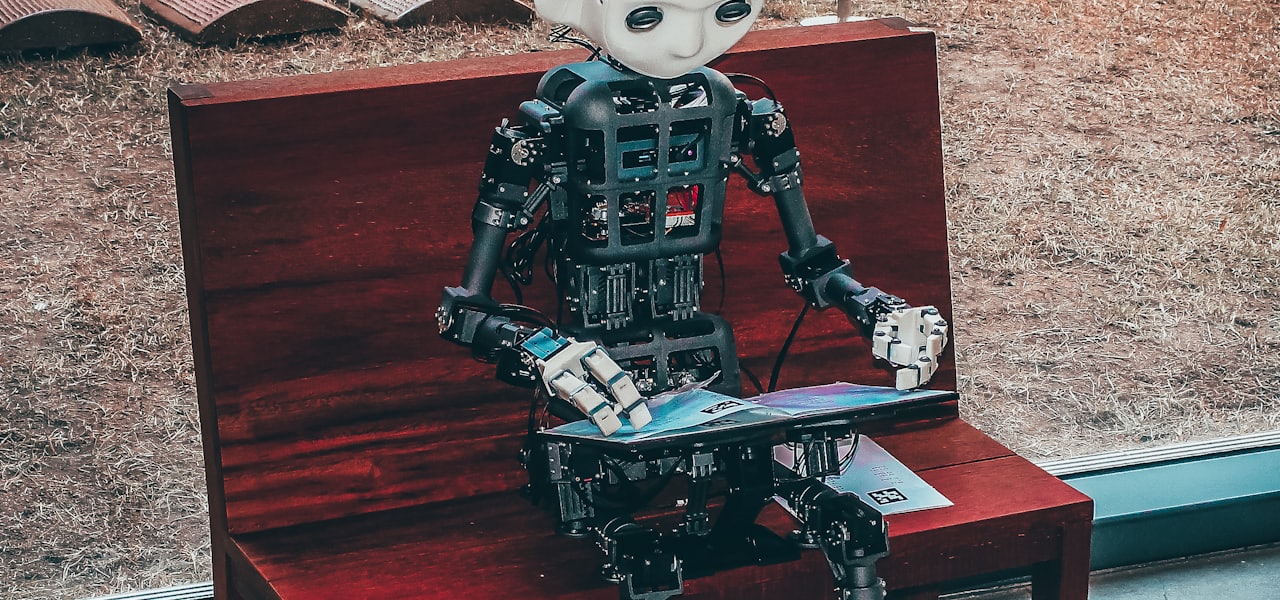
Developmental robotics (DevRob), sometimes called epigenetic robotics, is a scientific field which aims at studying the developmental mechanisms, architectures and constraints that allow lifelong and open-ended learning of new skills and new knowledge in embodied machines. As in human children, learning is expected to be cumulative and of progressively increasing complexity, and to result from self-exploration of the world in combination with social interaction. The typical methodological approach consists in starting from theories of human and animal development elaborated in fields such as developmental psychology, neuroscience, developmental and evolutionary biology, and linguistics, then to formalize and implement them in robots, sometimes exploring extensions or variants of them. The experimentation of those models in robots allows researchers to confront them with reality, and as a consequence, developmental robotics also provides feedback and novel hypotheses on theories of human and animal development. Developmental robotics is related to but differs from evolutionary robotics (ER). ER uses populations of robots that evolve over time, whereas DevRob is interested in how the organization of a single robot's control system develops through experience, over time. DevRob is also related to work done in the domains of robotics and artificial life. == Background == Can a robot learn like a child? Can it learn a variety of new skills and new knowledge unspecified at design time and in a partially unknown and changing environment? How can it discover its body and its relationships with the physical and social environment? How can its cognitive capacities continuously develop without the intervention of an engineer once it is "out of the factory"? What can it learn through natural social interactions with humans? These are the questions at the center of developmental robotics. Alan Turing, as well as a number of other pioneers of cybernetics, already formulated those questions and the general approach in 1950, but it is only since the end of the 20th century that they began to be investigated systematically. Because the concept of adaptive intelligent machines is central to developmental robotics, it has relationships with fields such as artificial intelligence, machine learning, cognitive robotics or computational neuroscience. Yet, while it may reuse some of the techniques elaborated in these fields, it differs from them from many perspectives. It differs from classical artificial intelligence because it does not assume the capability of advanced symbolic reasoning and focuses on embodied and situated sensorimotor and social skills rather than on abstract symbolic problems. It differs from cognitive robotics because it focuses on the processes that allow the formation of cognitive capabilities rather than these capabilities themselves. It differs from computational neuroscience because it focuses on functional modeling of integrated architectures of development and learning. More generally, developmental robotics is uniquely characterized by the following three features: It targets task-independent architectures and learning mechanisms, i.e. the machine/robot has to be able to learn new tasks that are unknown by the engineer; It emphasizes open-ended development and lifelong learning, i.e. the capacity of an organism to acquire continuously novel skills. This should not be understood as a capacity for learning "anything" or even “everything”, but just that the set of skills that is acquired can be infinitely extended at least in some (not all) directions; The complexity of acquired knowledge and skills shall increase (and the increase be controlled) progressively. Developmental robotics emerged at the crossroads of several research communities including embodied artificial intelligence, enactive and dynamical systems cognitive science, connectionism. Starting from the essential idea that learning and development happen as the self-organized result of the dynamical interactions among brains, bodies and their physical and social environment, and trying to understand how this self-organization can be harnessed to provide task-independent lifelong learning of skills of increasing complexity, developmental robotics strongly interacts with fields such as developmental psychology, developmental and cognitive neuroscience, developmental biology (embryology), evolutionary biology, and cognitive linguistics. As many of the theories coming from these sciences are verbal and/or descriptive, this implies a crucial formalization and computational modeling activity in developmental robotics. These computational models are then not only used as ways to explore how to build more versatile and adaptive machines but also as a way to evaluate their coherence and possibly explore alternative explanations for understanding biological development. == Research directions == === Skill domains === Due to the general approach and methodology, developmental robotics projects typically focus on having robots develop the same types of skills as human infants. A first category that is important being investigated is the acquisition of sensorimotor skills. These include the discovery of one's own body, including its structure and dynamics such as hand-eye coordination, locomotion, and interaction with objects as well as tool use, with a particular focus on the discovery and learning of affordances. A second category of skills targeted by developmental robots are social and linguistic skills: the acquisition of simple social behavioural games such as turn-taking, coordinated interaction, lexicons, syntax and grammar, and the grounding of these linguistic skills into sensorimotor skills (sometimes referred as symbol grounding). In parallel, the acquisition of associated cognitive skills are being investigated such as the emergence of the self/non-self distinction, the development of attentional capabilities, of categorization systems and higher-level representations of affordances or social constructs, of the emergence of values, empathy, or theories of mind. === Mechanisms and constraints === The sensorimotor and social spaces in which humans and robot live are so large and complex that only a small part of potentially learnable skills can actually be explored and learnt within a life-time. Thus, mechanisms and constraints are necessary to guide developmental organisms in their development and control of the growth of complexity. There are several important families of these guiding mechanisms and constraints which are studied in developmental robotics, all inspired by human development: Motivational systems, generating internal reward signals that drive exploration and learning, which can be of two main types: extrinsic motivations push robots/organisms to maintain basic specific internal properties such as food and water level, physical integrity, or light (e.g. in phototropic systems); intrinsic motivations push robot to search for novelty, challenge, compression or learning progress per se, thus generating what is sometimes called curiosity-driven learning and exploration, or alternatively active learning and exploration; Social guidance: as humans learn a lot by interacting with their peers, developmental robotics investigates mechanisms that can allow robots to participate to human-like social interaction. By perceiving and interpreting social cues, this may allow robots both to learn from humans (through diverse means such as imitation, emulation, stimulus enhancement, demonstration, etc. ...) and to trigger natural human pedagogy. Thus, social acceptance of developmental robots is also investigated; Statistical inference biases and cumulative knowledge/skill reuse: biases characterizing both representations/encodings and inference mechanisms can typically allow considerable improvement of the efficiency of learning and are thus studied. Related to this, mechanisms allowing to infer new knowledge and acquire new skills by reusing previously learnt structures is also an essential field of study; The properties of embodiment, including geometry, materials, or innate motor primitives/synergies often encoded as dynamical systems, can considerably simplify the acquisition of sensorimotor or social skills, and is sometimes referred as morphological computation. The interaction of these constraints with other constraints is an important axis of investigation; Maturational constraints: In human infants, both the body and the neural system grow progressively, rather than being full-fledged already at birth. This implies, for example, that new degrees of freedom, as well as increases of the volume and resolution of available sensorimotor signals, may appear as learning and development unfold. Transposing these mechanisms in developmental robots, and understanding how it may hinder or on the contrary ease the acquisition of novel complex skills is a central questi